Who is accountable, and for what
How the fund is governed, the people responsible for it, the documents that set the rules, and the entity itself.
How the fund is governed
The corpus cannot be spent
The constitution states that the corpus of the endowment fund must not be distributed or expended under any circumstances, and must be preserved intact for the long-term pursuit of the charitable purposes. Changing this requires a special resolution of members, and an amendment that would stop the company being a charity has no effect.
Conflicts of interest
Directors must disclose any perceived or actual material conflict, record it in the register of interests, and neither be present nor vote while the matter is discussed, subject to the limited exceptions in the constitution.
Distribution is a decision, not an automatic payment
The directors must consider each financial year whether to make grants from the income and returns of the fund, and may resolve not to distribute where returns are insufficient after operating costs, or where reinvesting better serves the long-term purposes. Those decisions and the reasons for them must be recorded in the minutes.
Overseas activity
Because the fund's purposes are directed overseas, the constitution requires the directors to maintain a risk management framework, a fraud and corruption control policy, a safeguarding policy, and a serious incidents and complaints policy. Partners and grant recipients must agree to operate consistently with them.
Directors and advisers
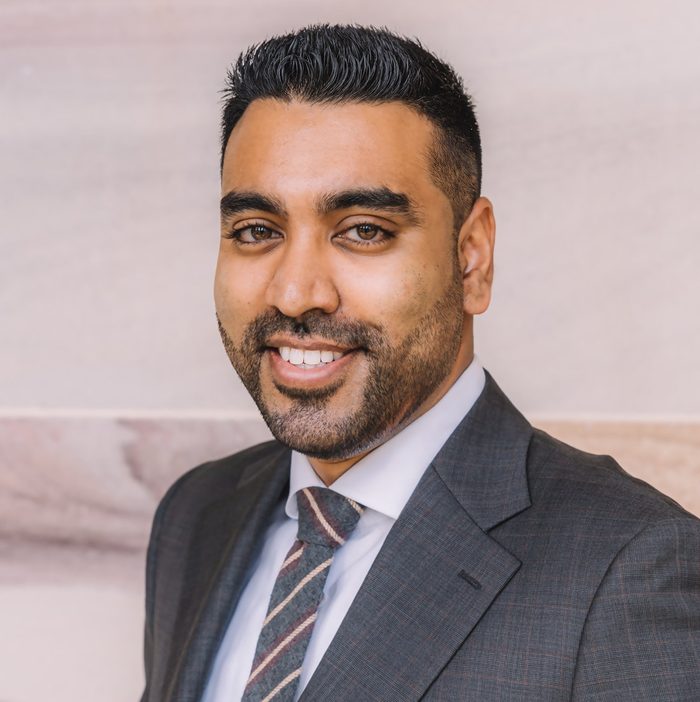
The Serendib Endowment is controlled by its directors. A group of advisers contributes expertise but takes no part in decisions.
Directors
The company's officers. They approve all distributions and grants, adopt the policies, and are accountable to the members and to the regulator.

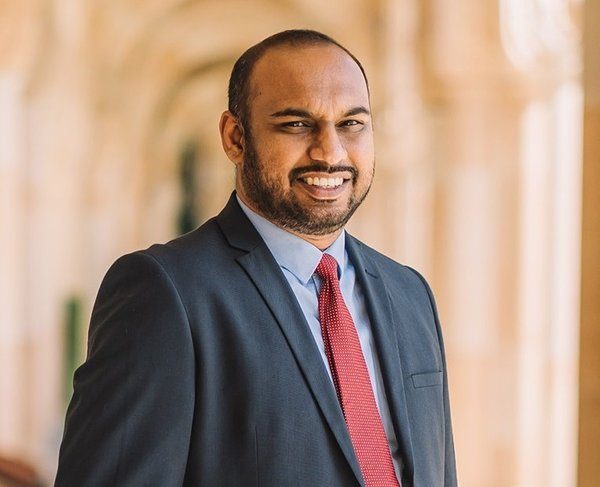


Advisers
They bring knowledge of Sri Lankan communities, logistics and technology.


The constitution prohibits directors' fees. All directors and advisers serve in a voluntary capacity.
Constitution and policies
Every governing document the constitution requires is adopted, in force, and reviewed by the directors at least every two years.
Constitution
The governing document. It sets the charitable purposes, protects the corpus from ever being spent, defines members' rights and the powers and duties of directors, and directs any surplus on a winding up to another charity rather than to members.
Investment Policy Statement
How the corpus is managed: the real return target of CPI plus 4% net of fees over rolling five-year periods, the spending rule, asset allocation and risk parameters, the prudent investor standard, and the ethical screens. It also caps product, platform and brokerage costs at 0.60% a year.
Policies and controls
The company maintains a suite of policies and internal controls governing how it makes decisions, manages money, works with partners overseas, and protects the people its work reaches. The directors adopt and review them, and they are provided to auditors, to regulators on request, and to the partners and grant recipients who are required to operate consistently with them.
Those set out below are among the principal documents. They are not the complete set.
- Safeguarding policy. Protects the children and vulnerable people our work reaches, including in how their images and stories are used. Binds our directors, anyone working for us, and every partner and grant recipient as a condition of receiving funds.
- Serious incidents and complaints policy. How concerns are received, recorded and answered; how serious incidents are reported to the relevant authorities in Australia and Sri Lanka; and how anyone who raises a concern in good faith is protected from adverse action, as our constitution requires.
- Grants policy. Eligibility, due diligence with enhanced checks for overseas recipients, board approval thresholds, written grant agreements and record keeping. The eligibility criteria will be published when an application round opens.
- Risk management framework. Identifies and manages the risks of operating and making grants in Sri Lanka.
- Fraud and corruption control policy. Covers overseas operations and all grant-making activity.
How the fund is invested
| Where it is held | An Australian investor directed portfolio service, operated by a licensed custodial services provider. The account is in the name of The Serendib Endowment Ltd. Legal title to the assets is held by the platform's appointed custodians on trust for the company, separate from the platform's own assets and from the adviser's. |
|---|---|
| Adviser | An Australian financial adviser, licensed under an Australian Financial Services Licence. The adviser provides investment advice, implements transactions the board has approved, and reports to the directors. |
| Who decides | The directors. The adviser acts only on decisions the board has approved and has no discretionary authority to buy or sell. Instructions and withdrawals require authorisation under the directors' financial delegations. |
| Fees | The adviser acts pro bono and receives no fees, commissions or other benefits from the company, from the platform or from product issuers. Product, platform and brokerage fees apply. The Investment Policy Statement caps those costs at 0.60% a year, reviewed annually, and the return target is stated net of them. All are disclosed in the financial statements. |
| Asset allocation | A growth profile, reflecting a perpetual horizon and no fixed liabilities. Target 70% growth assets (40% global equities, 30% Australian equities) and 30% defensive (25% fixed income, 5% cash), with growth permitted between 70% and 90%. Implemented through low-cost, broadly diversified index ETFs. |
| Ethical screens | Excludes tobacco, controversial weapons, gambling, coal, palm oil, modern slavery, and companies in sanctioned jurisdictions. ESG-screened index funds are the preferred means of implementation. |
| Related parties | No director or associate holds any ownership or financial interest in the platform, in the adviser or in the investments held. Two directors are personal clients of the adviser, which is how the pro bono offer arose. The relationship is recorded in the register of interests, and those directors receive no benefit from it. |
Operating and administrative costs are met from sources other than the corpus and the gift fund, so contributions are not spent on running the company.
Reporting
The financial year runs from 1 July to 30 June. The company must hold an annual general meeting within five months of the end of each financial year, at which the directors present the financial statements and a report on the year's activities.
Those documents, and the chair's annual letter, are published after the meeting. Between reports, contributors receive a personal update after each distribution to Sri Lanka.
Published reporting
Annual reports and financial statements sit on the reports page. The chair's annual letter and every other announcement sit on the updates page.
The entity
| Legal name | The Serendib Endowment Ltd |
|---|---|
| Australian Business Number | 73 698 867 408 |
| Australian Company Number | 698 867 408 |
| Structure | Not-for-profit public company limited by guarantee |
| Not-for-profit | Income and assets may only be applied to the charitable purposes in the constitution, and cannot be distributed to members. |
| Financial year | 1 July to 30 June |
| Jurisdiction | Queensland, Australia. Activities directed to Sri Lanka. |
| Postal address | PO Box 154, Carina QLD 4152, Australia |
| Phone | 1300 787 184 |
| info@serendibendowment.org |
Company details can be verified independently through ABN Lookup, and company details through the ASIC register.